Amazon Rainforest: Travel Guide for Indians
The Amazon Rainforest is a planetary regulator, a biodiversity engine and one of the last intact large-scale wilderness systems on Earth.
For India’s seasoned global traveller, the Amazon represents something rare: scale that humbles, ecosystems that challenge assumptions and access that cannot be replicated elsewhere.
This is your complete Amazon Rainforest travel guide, curated through the UnWild lens.
First things first, you may have heard that the Amazon produces 20% of the world’s oxygen. Scientifically, this is a bit misleading.
While the rainforest produces enormous oxygen through photosynthesis, it also consumes nearly the same amount through respiration and decomposition. Its true global importance lies in carbon storage, climate regulation, freshwater cycling and biodiversity density.
Understanding this distinction matters because meaningful travel begins with truth.
Where Is the Amazon Rainforest?
The Amazon spans over 6 million square kilometres across nine countries: Brazil (approximately 60% of the forest), Peru, Colombia, Ecuador, Bolivia, Venezuela, Guyana, Suriname, French Guiana.
For most curated expeditions, travellers typically access the forest through Lima (Peru), Bogotá (Colombia) or São Paulo (Brazil).
From there, charter flights or specialist operators arrange onward transfers into protected reserves.
Best Time to Visit the Amazon
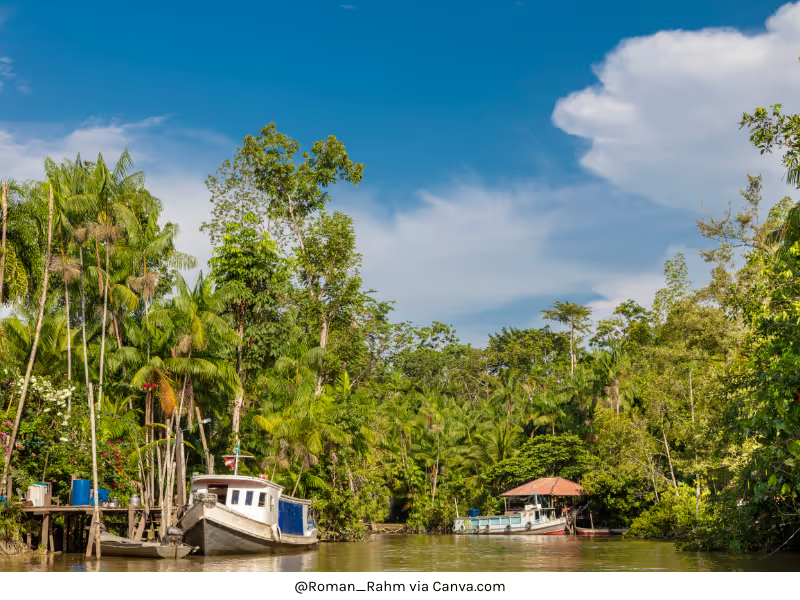
The Amazon has two primary seasons, each offering different advantages.
High-Water Season (January–June) where Rivers swell, allowing deeper navigation
Canoe access into flooded forests. It is excellent for river-based exploration, dramatic reflections and immersive boat safaris.
Ideal for travellers prioritising river expeditions and photography.
Low-Water Season (June–November) that allows more walking trails, increased wildlife visibility along riverbanks and better conditions for land-based trekking.
This period is often preferred for jaguar tracking and birdwatching.
There is no “dry” season as such. Rain is part of the ecosystem and part of the experience.
How Do You Get There?
There are no “direct” Amazon arrivals. Travel typically involves:
- International flight from India to South America
- Regional flight to gateway cities such as: Iquitos, Puerto Maldonado or Manaus
- Boat or small aircraft transfer into reserves
For UnWild travellers, the journey itself becomes part of the narrative.
Wildlife: What Makes the Amazon Extraordinary
The Amazon holds:
- Over 1,300 bird species
- Over 400 mammal species
- Thousands of fish species
- Tens of thousands of plant varieties
Iconic species include:
- Jaguar
- Pink River Dolphin
- Harpy Eagle
- Red-bellied piranha
The density of life per hectare in areas like Yasuni National Park is among the highest recorded anywhere on Earth.
Protected Regions Worth Accessing
- Manu National Park (Peru)
A UNESCO Biosphere Reserve known for extreme biodiversity and controlled access.
Best for: Serious birdwatchers, scientific immersion, low-density wilderness stays
- Pacaya Samiria National Reserve (Peru)
Often called the “Forest of Mirrors” during the high-water season due to extraordinary river reflections.
Home to: Pink dolphins, Caimans, Sloths, Giant river otters
- Amazon River
More than a river, it is a hydrological network influencing global weather systems.
Expedition cruising allows multi-generational travellers to experience depth without sacrificing comfort.
Rare Experiences That Elevate an Amazon Journey
Swim in Blackwater Lagoons (When Conditions Permit)
In carefully vetted areas, swimming alongside pink river dolphins can be safe and deeply moving when supervised responsibly.
Canoe Through Flooded Forests
During the high-water season, entire forest systems become navigable, offering rare canopy-level immersion.
Visit Ethical Wildlife Rescue Centres
Near Iquitos, responsible centres rehabilitate manatees and other animals rescued from illegal trade before rewilding them.
Canopy Walkways
In protected areas, elevated bridges allow access to upper forest strata where nearly 70% of Amazon wildlife resides.
Piranha Fishing (Regulated & Local-Led)
An adrenaline-filled activity rooted in local subsistence practices.
UnWild Planet Expert Packing Guide
The Amazon demands preparation. {Link to the Packing Guide on the South America Landing Page}
At UnWild Planet, Amazon journeys are curated with conservation-linked lodges, low guest density, expert naturalists & ethical community engagement.
Because the future of travel will belong to those who move gently.
.avif)
