.avif)
The Galápagos Marine Reserve is vast in reach, richer still in life, one of the planet's most celebrated marine sanctuaries. At the intersection of three great ocean currents, the Galápagos Marine Reserve exists in a state of beautiful contradiction. Cold upwellings meet warm tropical waters, temperate species share space with equatorial ones, and the rules that govern ocean life elsewhere seem to have been quietly rewritten here.
The Galápagos Marine Reserve is a living, breathing reminder of what our oceans looked like before we forgot to protect them.
133K
km² of protected ocean
7
ocean currents converging
Since 1998
marine reserve status
A sanctuary unlike any other
.avif)
Where currents collide and evolution thrives
Penguins swim alongside tropical fish. Sea lions spiral through water columns with marine iguanas (the only seafaring lizards on Earth). Hammerhead sharks move in formations so dense they briefly blot out the light. It is far from anything one imagines.
“I've travelled to wild corners of every continent but slipping beneath the surface here stopped me completely. A green sea turtle glided past, unafraid, like it had never learned that humans were something to flee. That moment changed how I think about what conservation can actually achieve.”
— Rohan Prakash, Founder, Unwild Planet
Below the surface at Kicker Rock
The Galápagos has many diving spots but one of our favourite ones is Kicker Rock. León Dormido to those who know it by its proper name, is perhaps the archipelago's most dramatic dive site. It is called so because of it’s resemblance to a sleeping sea lion. Volcanic pillars climb 150 metres from the ocean floor, their walls encrusted with black coral and nudibranchs in colours that seem implausible. Schools of barracuda spiral in silver cylinders. White-tipped reef sharks rest in sandy hollows below.
What Jacques Cousteau understood when he called these "the most marvellous waters in the world" still holds: the Galápagos Islands are merely the tips of an immense underwater mountain range. The real spectacle lives in the spaces between islands, in the channels and currents and cave mouths that most visitors never see.
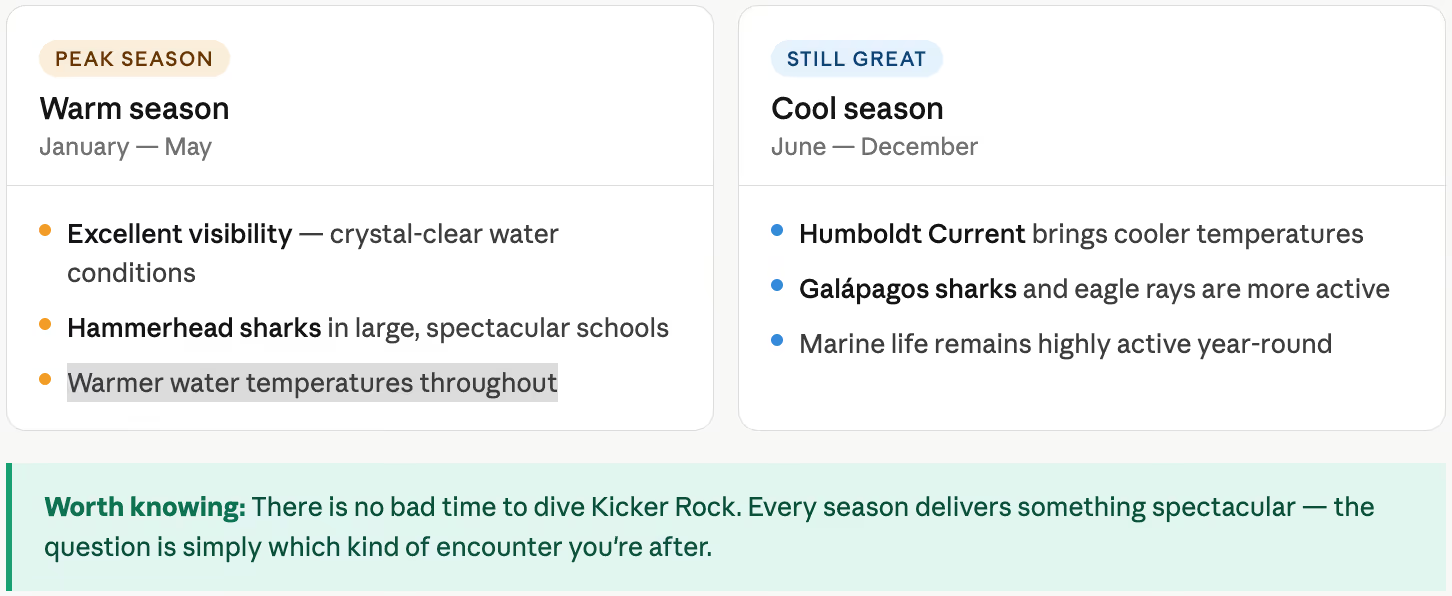
Worth knowing: There is no bad time to dive Kicker Rock. Every season delivers something spectacular, the question is simply which kind of encounter you're after.
The wildlife here has never learned fear. Marine iguanas graze on algae-covered rocks beneath you without a glance upward. Galápagos penguins, the only tropical penguins in the world, torpedo past in pursuit of fish. Bottlenose dolphins appear without warning, their whistles audible through your snorkel. No other ocean offers this: wildness without wariness, abundance without the earned suspicion of over-visited seas.
“On my last morning in the water, a Galápagos penguin came close enough that I could have reached out and touched it. It looked at me with what I can only describe as mild curiosity before shooting off after a fish. I laughed through my snorkel. That's the Galápagos that surprises you.”
— Rohan Prakash, Founder, Unwild Planet
What conservation looks like
The marine reserve operates under strict governance: no commercial fishing, no anchoring in critical zones, carefully capped visitor numbers at each site. The results are visible in the water itself. Snappers and groupers have grown to sizes rarely encountered in modern oceans. Shark populations patrol in numbers that would once have seemed incomprehensible, before commercial fishing taught us to accept scarcity as normal.
Some of the organizations doing great work in this space are - Sea Shepherd , Charles Darwin Foundation and WildAid.
At UnWild Planet, we believe this is what responsible travel looks like in practice. Every guided excursion we run here contributes directly to the economic model that keeps these protections viable; proving, again and again, that living ecosystems hold infinitely more value intact than extracted.
Plan your journey with UnWild Planet. The Galápagos is waiting.
Our small-group expeditions are led by naturalists who've spent years in these waters. Limited places each season, by design.
.avif)